Schools Move From Banning Chatbots to Teaching Children Their Flaws
A growing number of United States public schools are teaching AI literacy, letting students see how chatbots fabricate information rather than banning them outright. Educators say children must learn when not to use these tools, and to verify anything a chatbot presents with authority.
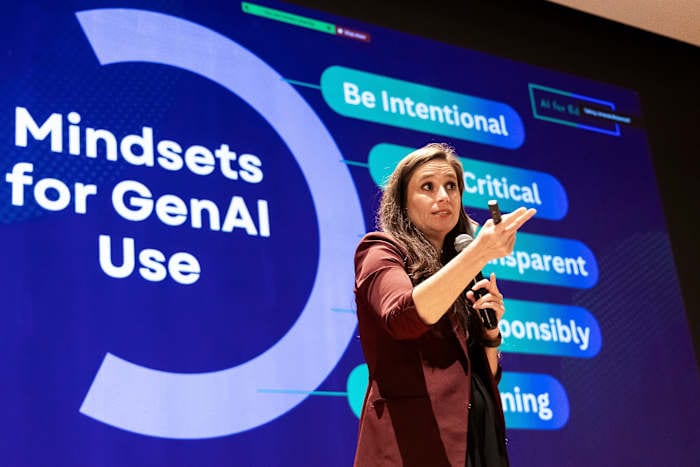
After first trying to ban artificial intelligence, a growing number of United States public schools are shifting toward a different approach: letting students experiment with chatbots so they can witness their shortcomings. Among these is the tendency of generative AI to fabricate information, presenting false claims, including invented studies, with unflinching authority.
In one training exercise described in the reporting, an instructor asked an AI tool to draw a map of the world. The result was riddled with errors, with country names misspelled or reduced to gibberish. The demonstration was intended to show teachers, and by extension students, why the tools should not be over trusted.
Educators interviewed said that AI literacy means more than writing good prompts. It includes knowing when not to use the technology, verifying any factual claim, and guarding personal data, since conversations can be stored and potentially leaked. One specialist described the message for younger children in plain terms: people can lie, a program can lie, a robot can lie.
The Foundation notes the stated motivation behind these efforts. Schools and parents say they want to avoid repeating the mistakes made with social media, where children were left to explore the online world without being taught about addictive design and comparison culture, harms since linked to a decline in youth mental health and attention. There is concern, too, that children in under-resourced districts may not receive the same instruction, given the cost of training.
This account is based on original reporting by the Associated Press, available here.
Sources
- Associated Press wsls.com